
Maintenance of GIS switchgear (SF6)
We maintain components, parts and pipework of GIS installations, i.e. gas-insulated switchgear that uses sulfur hexafluoride (SF₆) as its insulating gas. We seal, repair and protect against corrosion, directly at your installation.
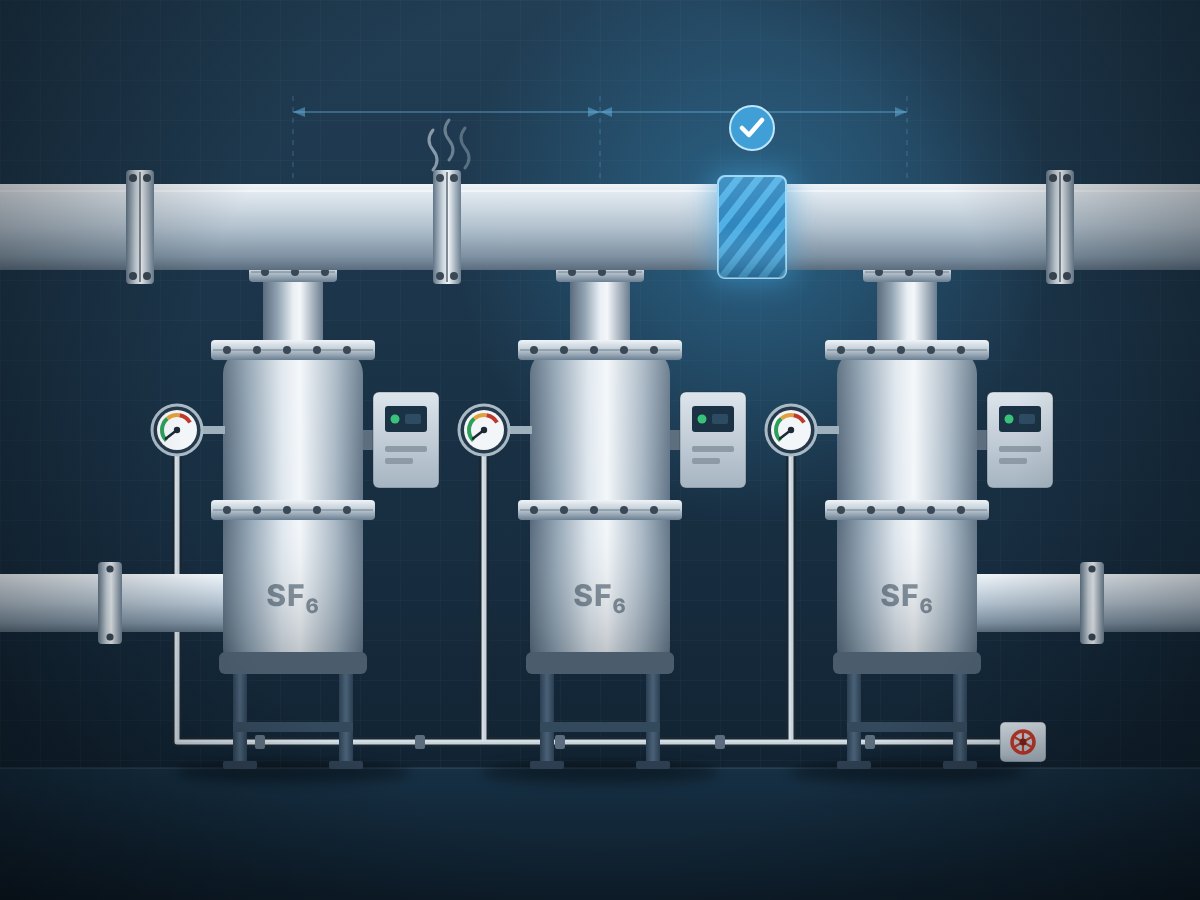
Why tightness matters in GIS installations
Gas-insulated switchgear, GIS for short, is used in many substations, power stations and industrial networks. Its live parts sit in enclosed gas compartments filled with sulfur hexafluoride (SF₆). This makes GIS installations compact and reliable, but it requires housings, flanges, connections and pipework to stay leak-tight for decades.
SF₆ is an extremely potent greenhouse gas, more than 20,000 times as climate-active as CO₂. Every leak harms the climate, costs money for refilling and can, over time, reduce the insulating capability of the installation. The EU F-gas Regulation also requires detected leaks to be repaired without undue delay.
Components, parts and pipework
Typical weak points are flange joints and sealing faces, corroded housings and enclosures, connections of density monitors and valves, and the pipework of the installation. We assess the condition on site and repair the affected areas in a targeted way: we seal, rebuild material and protect the surfaces against further corrosion.
Cold-applied, no hot work
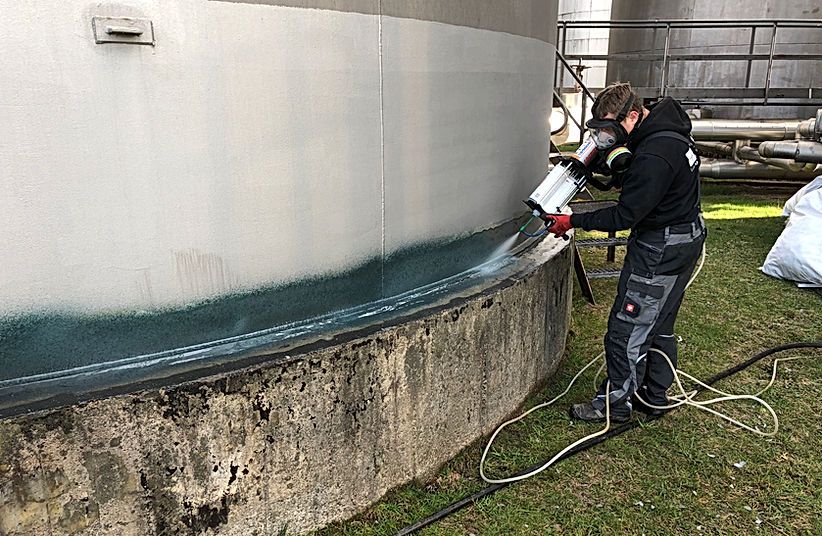
Our polymer and composite systems are cold-applied. There is no welding and no heat input into the component. Which work is possible on your installation, and which isolations it requires, we agree in advance with the person responsible for the installation.
Typical tasks on GIS installations
Sealing leaks
Permanently sealing leaks at flanges, sealing faces and connections of SF₆ gas compartments.
Flange joints
Removing corrosion on flanges and sealing faces before it turns into a leak.
Housings & enclosures
Repairing and protecting damaged or corroded housings and enclosures.
Pipework
Sealing and repairing the pipework of GIS installations and protecting it against corrosion.
Components & parts
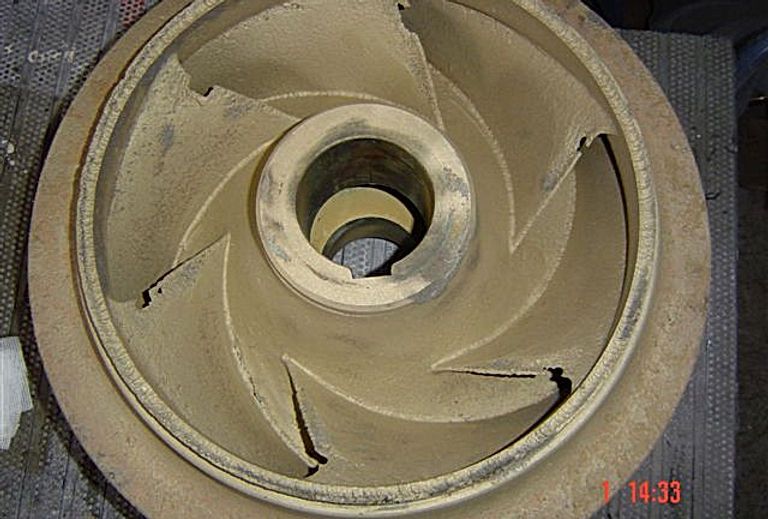
Restoring damaged components and parts to size with polymer metals.
Corrosion protection
Preparing and coating surfaces, especially on outdoor installations.
Why GIS Switchgear & SF6
- ✓Repair instead of replace – Components and parts stay in the installation instead of being replaced at high cost.
- ✓No hot work – Cold-applied systems with no heat input into the component.
- ✓Lower SF₆ losses – A leak-tight installation protects the climate and saves refilling.
- ✓Coordinated work – Work is planned together with the person responsible for the installation.
Our approach
Assessment
Recording the condition of components, flanges and pipework, on site or in advance from photos.
Concept
Selecting a suitable sealing or repair system and agreeing the procedure with the person responsible for the installation.
Execution
Surface preparation, sealing and repair by trained personnel.
Handover
Inspection and documentation of the work carried out.
FAQ: GIS switchgear and sulfur hexafluoride (SF6)
What is a GIS installation?
GIS stands for gas-insulated switchgear. Its live parts sit in closed, usually metal enclosures filled with an insulating gas – in most installations sulfur hexafluoride (SF₆). GIS installations need much less space than air-insulated switchgear and are used in substations, power stations and industrial networks.
What is sulfur hexafluoride (SF₆)?
Sulfur hexafluoride, SF₆ or SF6 gas for short, is a colourless, odourless, non-flammable gas with very good insulating and arc-quenching properties. At the same time it is an extremely potent greenhouse gas, more than 20,000 times as climate-active as CO₂. That is why tightness is so important in GIS installations.
Why are leaks in GIS installations a problem?
If SF₆ escapes, the gas density in the compartment drops. The density monitors first report this as a warning; if the density keeps falling, operation of the installation may be restricted. In addition, every kilogram of SF₆ released harms the climate, and the EU F-gas Regulation requires detected leaks to be repaired without undue delay.
Which parts of GIS installations do you maintain?
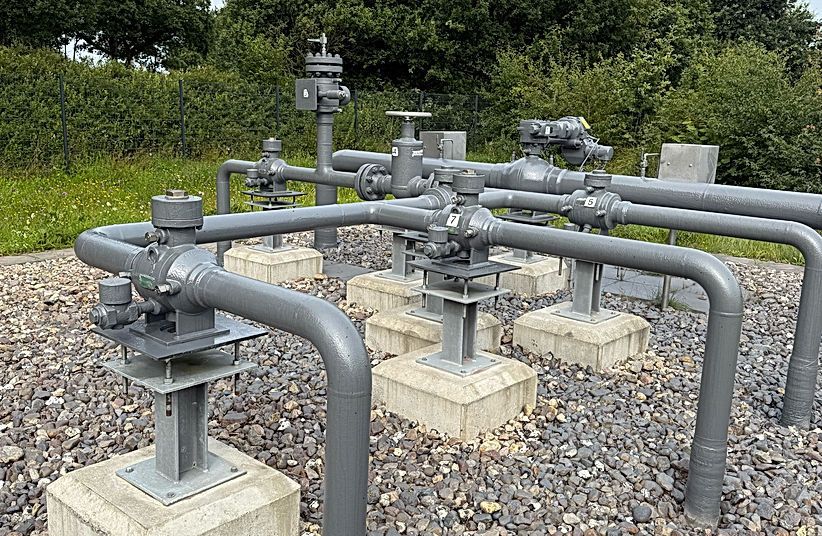
We maintain components, parts and pipework of GIS installations, for example flange joints and sealing faces, housings and enclosures, as well as connections and lines. What makes sense for your installation we clarify after an assessment.
Does the installation have to be shut down for the work?
That depends on the installation, the location of the damage and the scope of work. We agree every job in advance with the person responsible for the installation and follow their requirements for work safety and isolation.
You may also be interested in
Request a project: GIS Switchgear & SF6
Briefly describe the component, the damage and the operating conditions – photos by e-mail are welcome. We will get back to you with a sound technical assessment.
Send an enquiry
We usually reply within one working day.