
Gap compensation – the liquid shim
The modern alternative to shim plates and wedge plates: gaps between components are filled completely by injection. The result is a 100 % form-fit and force-fit connection – in machine building, steel construction, industrial hall construction and bridge construction.
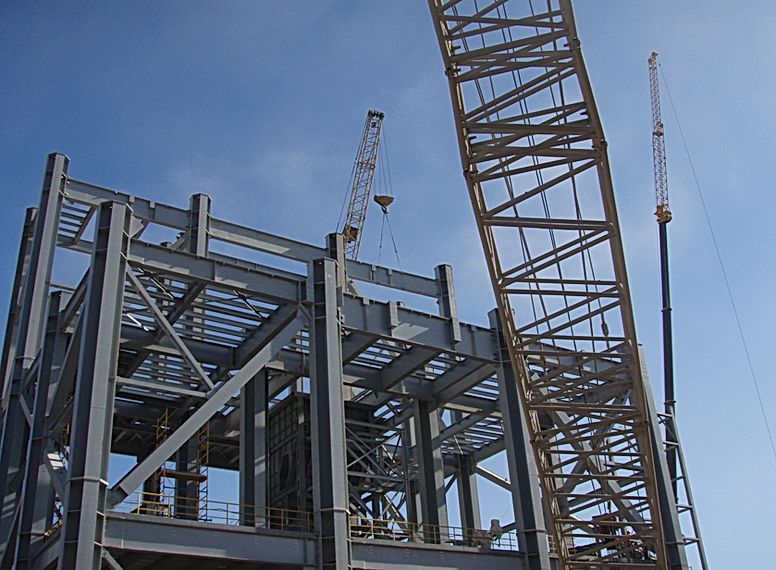
Close gaps completely instead of shimming them
When installing head plates, bridge bearings, flanges or wedge plates, gaps almost always occur. Traditionally, they are compensated with shim plates – which requires precise measurement and mechanical fitting, and still leaves voids in which condensation collects.
Gap compensation, known internationally as liquid shim, adapts to any gap geometry. The material is applied in liquid or paste form, cures with minimal shrinkage and fully restores the form-fit and force-fit connection between the components – on circular rings, flanges and head plates, and even between steel and concrete.
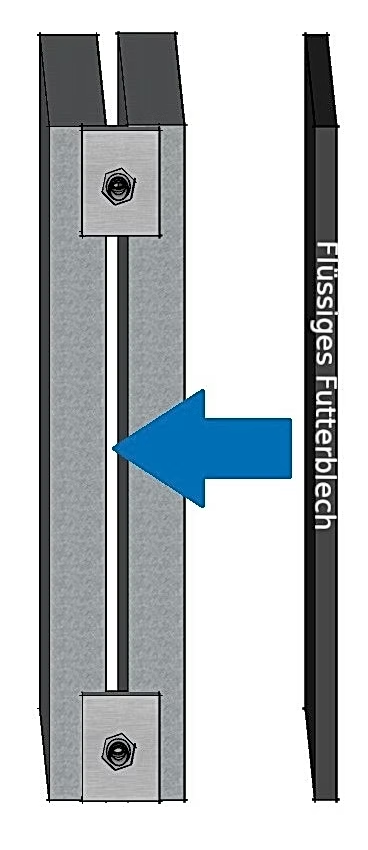
Injected as a liquid or applied as a paste
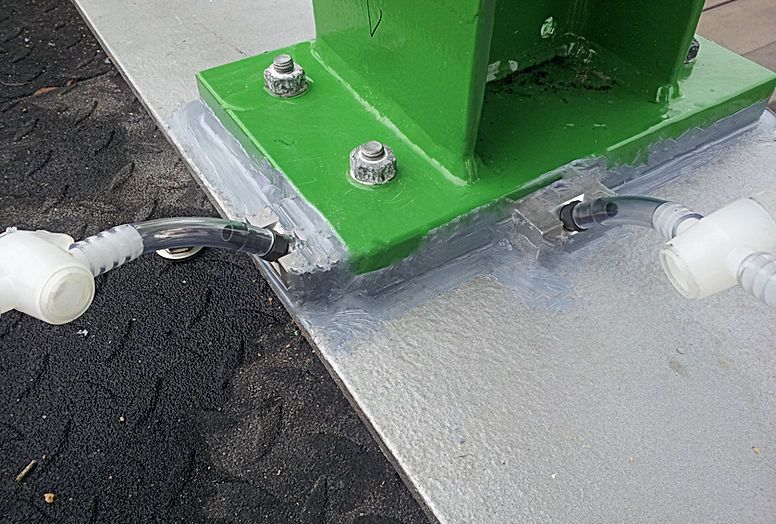
In the liquid version, the material is pressed directly into the gap via injection ports (packers) and vented through individual ports until the gap is completely filled. The component temperature is decisive: below +5 °C, the component is preheated.
In the paste version, the material is applied to the component before joining. Here, the shape of the application determines whether the gap is completely filled when the parts are joined.
More than 300 projects worldwide
DSM has used gap compensation in well over 300 projects – in hydraulic steel structures, bridge construction, and steel and structural steel construction. We will be happy to send you reference excerpts on request.
Applications
Head plates & column bases
Load transfer across the full surface instead of via individual shim plates.
Bridge bearings & bridge construction
Gap-free supports for components under permanent dynamic loading.
Circular rings & flanges
Evenly support and seal ring-shaped connections.
Crane runways
Close voids beneath crane rails across the full surface.
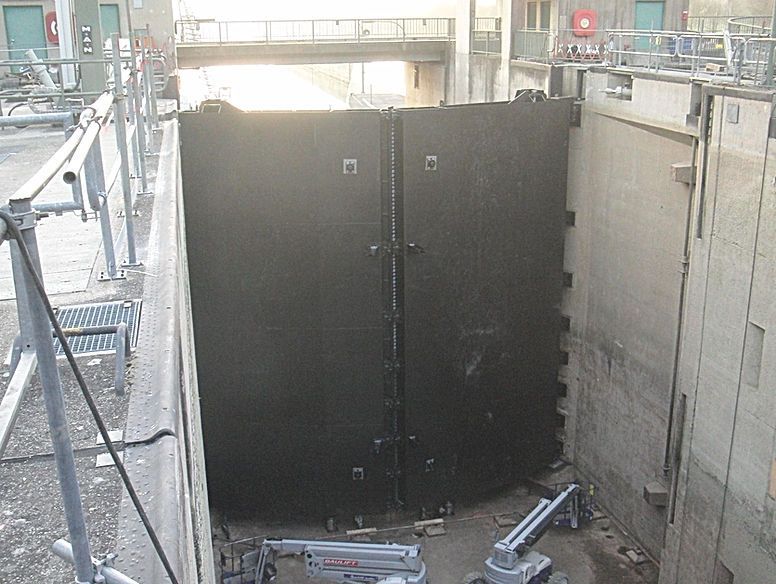
Hydraulic steel structures
Locks and weirs with corrosion-resistant gap filling.
Machine foundations
Grout machines and frames onto the foundation without gaps.
Project examples
Insights into work carried out by DSM.
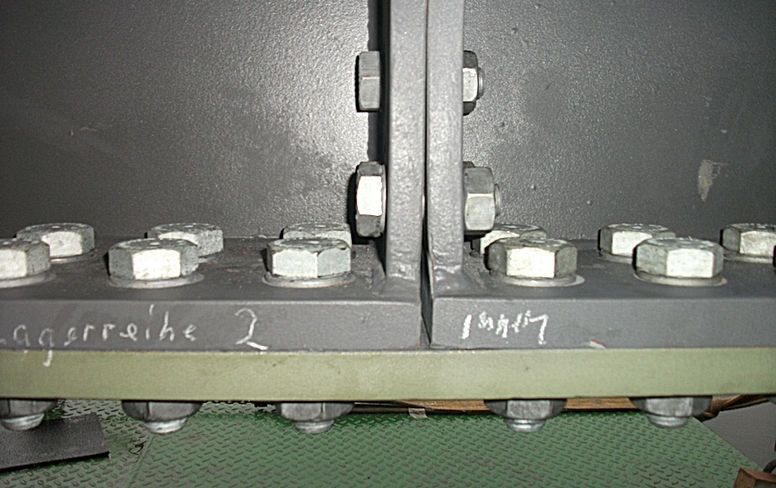
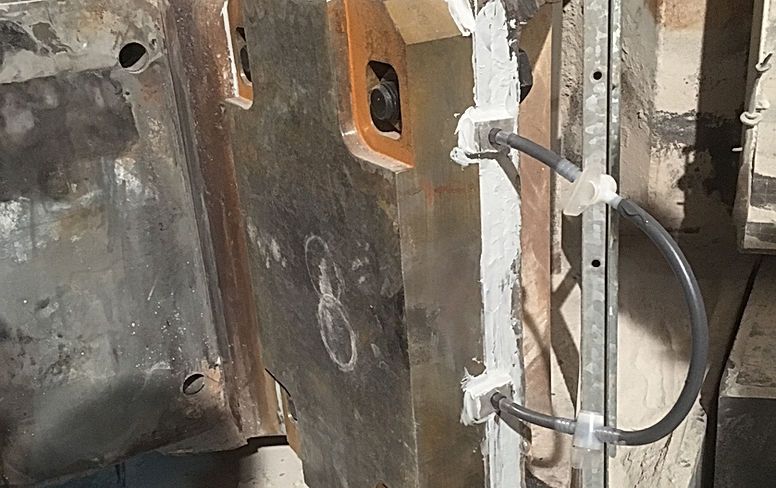
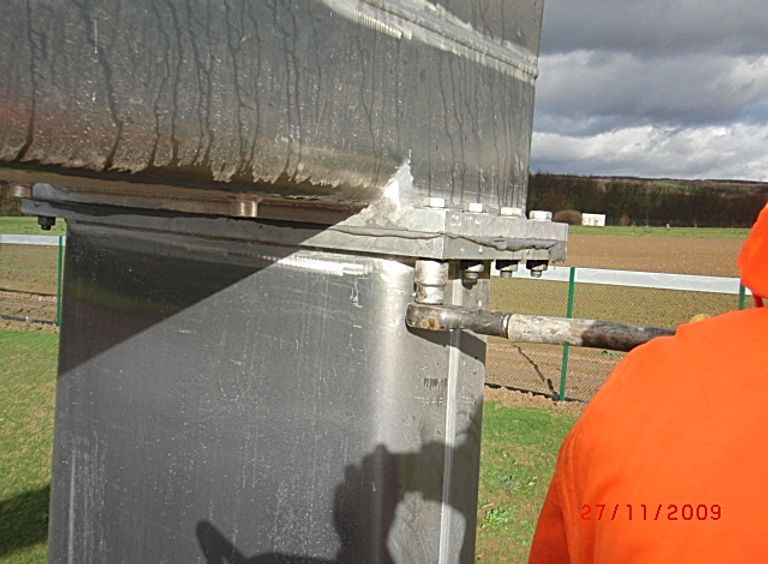
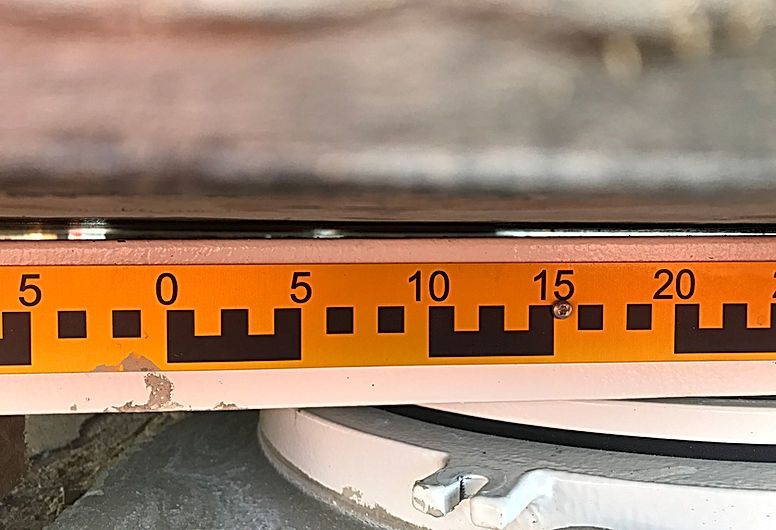
Why Gap Compensation & Grouting
- ✓Adapts to any gap – No mechanical fitting, very low shrinkage.
- ✓Corrosion protection – Corrosion-resistant, electrically non-conductive, displaces condensation.
- ✓Chemical resistance – Resistant to oils, fuels, coolants, alkalis, acids and rain.
- ✓Gentle on components – No thermal stress on components, significant time and cost savings.
Our approach
Gap survey
Record the position, size and accessibility of the gap.
Preparation
Seal the edges and set the injection ports (packers).
Injection
Fill and vent until the gap is completely filled.
Curing
Check the full-surface form-fit and force-fit connection.
FAQ: Gap Compensation & Grouting
What is a liquid shim?
A liquid shim – also called a liquid shim – is a gap compensation material that is introduced in liquid or paste form into the gap between two components, where it cures. It replaces shim plates and wedge plates and creates a full-surface form-fit and force-fit connection.
May gap compensation be used on load-bearing steel components?
The material meets the requirements of DIN EN 1090-2. Whether and how it is used in your construction project is agreed with the structural engineers and the parties involved in the project.
At what temperatures can it be applied?
The component temperature is decisive. If it is below +5 °C, the component is preheated to at least +5 °C before injection.
Does gap compensation also work between steel and concrete?
Yes. Gap compensation is suitable not only for steel-to-steel connections but also for transitions between steel and concrete.
What compressive strength does the material achieve?
The compressive strength is 85 to 150 N/mm² – even under vibration and temperature fluctuations between −40 °C and +121 °C.
You may also be interested in
Request a project: Gap Compensation & Grouting
Briefly describe the component, the damage and the operating conditions – photos by e-mail are welcome. We will get back to you with a sound technical assessment.
Send an enquiry
We usually reply within one working day.